About
Human Connection
Forks is a tool for connecting people through the decisions they make. You make decisions all day — about your career, about the people you care about, or about what to eat for lunch. Then one day, usually at a moment you were not expecting, you meet someone or you walk into something that changes your life completely. You cannot plan for it. You will not even know it is happening at the time. Forks brings a group of people through a few of those moments together, in a room or online on a video call.
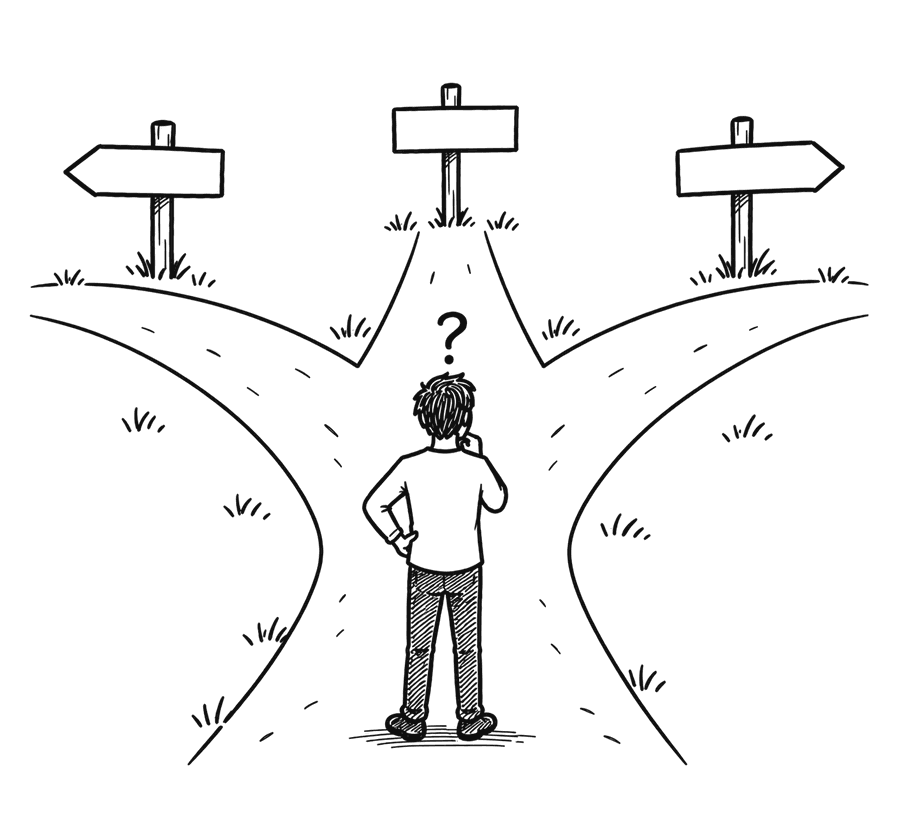
Six forks, and rhyming between them
In a session you reach six forks: six questions, each with three choices. The one you pick draws a line to the next fork. In life, you repeat this many times over to get from address A to an unknown address B. The lines connecting the forks only appear later, when you look back. You might meet someone whose chosen path “rhymed” with yours.
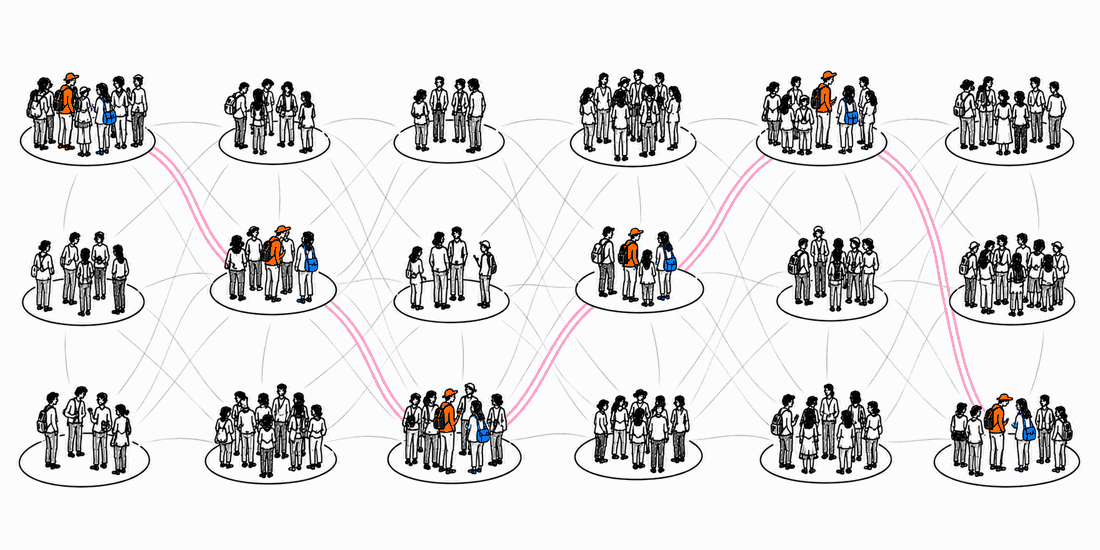
A rhyme means one thing only. You made the same decision at a fork, and walked on the same path to the next one. The rhyme lasts as long as you keep choosing alike, fork after fork, and ends where your paths split.
A perfect rhyme is the same decision at every fork, from the first to the last. Each of you will land at address B by the end of the session, the same one or a different one. It does not mean you are a perfect match, or the opposite.
Whether it means anything at all is something you can only find out by talking to them.
What a fork looks like
Each fork is a question. It is one short situation from everyday life, and three things you could do. For example:
Your father gives you a sweater he chose himself, and you would never wear it.
- Wear it to dinner tonight.
- Thank him and put it away.
- Tell him it is not your style.
Every question comes from one of seven areas of life found in every culture, such as what you say or what matters most to you, and each one involves someone: a parent, a friend, a stranger, or yourself. Some are serious, some are light, and some are funny. There is no right answer and no "other" answer, and you choose alone, in the moment.
What happens in a session
In a room, you need a smartphone with a camera and an internet connection: scan the QR code on the main screen. Online, open the joining link in a new browser tab on your computer, or scan the QR code on the shared screen with your phone. Either way, you are given a number, and that is your ID for the rest of the session.
- Six questions, three choices each
Your facilitator tells you when to start. The question and its three answers appear on your screen. Pick the one closest to what you would really do. There is no back button, the way life has none.
- Turn and talk
After each question, the main screen shows how the group divided: how many picked each choice. Talk about the decision you made with the people near you, or online, in a breakout room if your facilitator opens one.
- Find your rhymes
After the last answer, your screen tells you which group to go to, and shows the IDs of your rhymes: the people who made the same choices as you, for as long as you both did. Go to your group, or online, to your group's breakout room, and talk about how you decided.
How we chose six questions
We tested the idea in 500 made-up rooms of 200 people, where everyone picked their answers at random. Six questions with three choices gave the best result: in a typical room, about 48 people, one in four, found somebody whose path rhymed with theirs all the way.
Three choices per question. Each bar is the average of 500 random rooms.
With four or five questions, most of the room finds a perfect rhyme, so finding yours means little. With seven or eight, almost nobody does, and some rooms end with nobody at all. Six sits in between: rare enough to feel like something, common enough that every room has some.
The number of choices matters the same way. With two choices per question, 96% of the room rhymes perfectly. With four, only 5% does. Three choices also keep a question from turning into a scale with a bold end and a careful end.
Six questions work for groups of about 120 to 300 people.
Smaller groups
Not every group can bring together 120 people. A class or a team at work may have 30 or 50. The same six questions still work, but the rhymes are shorter. In made-up groups of 50, about 3 or 4 people found someone who chose alike at all six questions. About half found someone who chose alike for at least the first four.
So in a smaller group, everyone still meets their rhymes, and the conversation is less about who matched all the way. It is about how far you walked together, and where your paths split.
What Forks adds: your decisions matter
Most tools that match people, for networking or for dating, start from who you are on paper: your type and your preferences. They pair people whose profiles look alike.
Forks looks at something those tools leave out: the choices you make in the moment. Everyone in the session faces the same situation, and each person picks one of three ways forward. We believe choices like these shape a life a great deal. Two people can rhyme however different their profiles look, and Forks never asks what kind of person you are.
Your type and your preferences show up in the decisions you make, and decisions turn into actions. Actions carry you from address A, where you are now, toward an address B you cannot see yet.